
Views: 120 Author: Site Editor Publish Time: 2026-01-12 Origin: Site


Wondering how long your brake pads really last? Most brake pads stay effective between 25,000 and 65,000 miles. You might even get over 70,000 miles from ceramic pads if you drive gently. On average, drivers change brake pads around the 40,000-mile mark. Factors like aggressive driving, stop-and-go traffic, and rough roads wear them out faster. High-quality friction materials from brands like Talfri Brakes can help your brake pads go the distance, even in tough conditions.
Most brake pads last between 30,000 and 70,000 miles. Regular checks help you know when to replace them.
Driving habits matter. Smooth braking and avoiding heavy loads can extend the life of your brake pads.
Choose high-quality brake pads from trusted brands like Talfri Brakes. They last longer and perform better.
Listen for warning sounds like squeaking or grinding. These signals mean it's time to check or replace your brake pads.
Inspect your brake pads every 10,000 to 15,000 miles. Early detection of wear can save you from costly repairs.
You probably want a clear answer to how many miles do brakes last. The truth is, the answer depends on a few things, but you can expect most brake pads to last between 30,000 and 70,000 miles. Some manufacturers even claim their brake pads can go up to 100,000 miles if you drive in perfect conditions. Most drivers find themselves replacing brake pads around the 40,000 to 50,000-mile mark.
Here’s a quick look at what you might see from different brands:
Brand Name | Average Lifespan (miles) | Pros | Cons |
|---|---|---|---|
Brand A | 50,000 | Durable | Expensive |
Brand B | 40,000 | Affordable | Less durable |
Brand C | 60,000 | High performance | Noisy |
Most brake pads last 30,000 to 70,000 miles.
Some brands claim up to 100,000 miles.
The average lifespan is about 50,000 miles.
Lifespan changes based on your vehicle, how you drive, and the quality of the pads.
Tip: If you want your brake pads to last longer, choose high-quality friction materials from trusted brands.
Not all brake pads wear out at the same speed. Your habits and your car make a big difference. Here are the main things that can change how long your brake pads last:
Driving Habits: If you drive in heavy city traffic and stop often, your brake pads will wear out faster. Hard braking and quick stops also make them wear down quickly.
Vehicle Type: Bigger vehicles like trucks and SUVs are heavier. They put more pressure on brake pads, so you might need to replace them sooner.
Driving Style: If you drive aggressively, brake hard, or speed up quickly, your brake pads will not last as long.
Quality of Brake Pads: High-quality brake pads, like those made with advanced friction materials, last longer and perform better. Lower-quality pads wear out faster.
Road and Weather Conditions: Rough roads, steep hills, and wet or muddy conditions can make brake pads wear out faster.
Maintenance: Regular inspections and timely replacements help your brake pads last longer. If you check your brakes often, you can catch problems early and avoid extra wear.
Note: You can help your brake pads last longer by driving smoothly, keeping your car light, and getting regular brake checks.
If you want to get the most out of your brake pads, remember these tips:
Drive at a steady speed and avoid sudden stops.
Use engine braking when going downhill.
Don’t overload your vehicle.
Pick high-quality brake pads for better durability.
By paying attention to these factors, you can help your brake pads last as long as possible and keep your car safe on the road.
When you look for brake pads, you will see many kinds. Each type works best for certain jobs. The material inside the brake pad matters a lot. It changes how long the pad lasts and how well it works.
Talfri Brakes is known for making strong friction materials. They have many products to pick from. You can find woven, laminated, molded, extruded, and carbon ceramic composite materials. These choices help you get the right brake pad for your car, truck, or even big machines.
Here’s a simple chart showing the main brake pad types and how long they last:
Brake Pad Type | Typical Lifespan (miles) | Ideal Use |
|---|---|---|
Organic | 20,000 - 30,000 | Light-duty vehicles, moderate climates |
Semi-Metallic | 30,000 - 50,000 | Heavy-duty vehicles, off-road, heavy loads |
Ceramic | 40,000 - 70,000 | Daily drivers, city commuters, light-duty vehicles |
Many older or smaller cars use organic brake pads. These pads are soft and quiet. They do not make much dust. They work best if you drive in mild weather. They are not good for hard braking. They wear out faster than other pads. You may need to change them sooner.
Semi-metallic brake pads mix metals with other stuff. They last longer than organic pads. They can handle heat better. If you drive a truck or carry heavy things, these pads stop you well. They can be louder and make more dust.
Ceramic brake pads are good for daily driving. They last a long time and stay quiet. Even in busy traffic, they do not make much noise. You will see less dust on your wheels. They work in hot and cold weather. These pads cost more at first. But you will not need to change them as often.
Some cars or trucks need special brake pads for hard jobs. Talfri Brakes makes advanced pads like carbon ceramic composites. These pads can take a lot of heat and heavy use. They are great for big machines or fast cars.
Picking the right brake pads helps your car work better and last longer. Good materials from Talfri Brakes can really help.
The way you drive changes how long brake pads last. If you stop fast or speed up a lot, your brake pads wear out quicker. Aggressive driving makes more heat and friction. This causes the pads to break down faster. In the city, you might use your brakes 75,000 times each year. That is a lot of chances for brake pads to wear out!
Driving hard and stopping quickly makes more heat and friction. This wears out brake pads, rotors, and calipers faster.
Hard stops can make brake pads reach 500°F. This high heat breaks them down quickly.
Most city drivers use their brakes about 75,000 times a year. This means lots of wear on the brake pads.
To help your brake pads last longer, try to stop gently and avoid quick stops.
The type of car you drive affects brake pad wear. Big vehicles like trucks and SUVs are heavy. They put more pressure on brake pads. You may need to change them sooner. Small cars are lighter and usually wear out pads slower. Electric vehicles use regenerative braking. This helps brake pads last longer.
Vehicle Type | Brake Pad Lifespan Impact |
|---|---|
Full-size SUVs/Trucks | Brake pads wear out faster because they are heavy |
Compact Sedans | Brake pads last longer because they are lighter |
Electric Vehicles | Brake pads last even longer with regenerative braking |
Where you drive and the weather can wear out brake pads faster. Rainy weather makes more friction and pressure on the pads. Hilly roads make you brake more, so pads wear out quicker. Roads with sand or gravel can also cause extra wear, especially if you drive fast.
Heat and moisture can make brake pads wear out faster.
City driving with lots of stops wears pads out faster than highway driving.
Very hot or cold weather can make brakes work less well.
Very hot or cold weather can change how your brakes work. Hot days can make brakes fade. Cold days can make brake fluid thick and slow. Wet roads can also wear out brake pads faster.
The quality of your brake pads is very important. Good pads last longer and keep you safer. Pads made with better materials handle heat and friction better. Cheap pads wear out fast and may not stop your car as well. Good brake pads last longer and work better. High-quality pads are safer and stronger than cheap ones. The materials, heat control, and how you drive all matter for how long pads last.
If you want your brake pads to last, pick trusted brands and certified products.
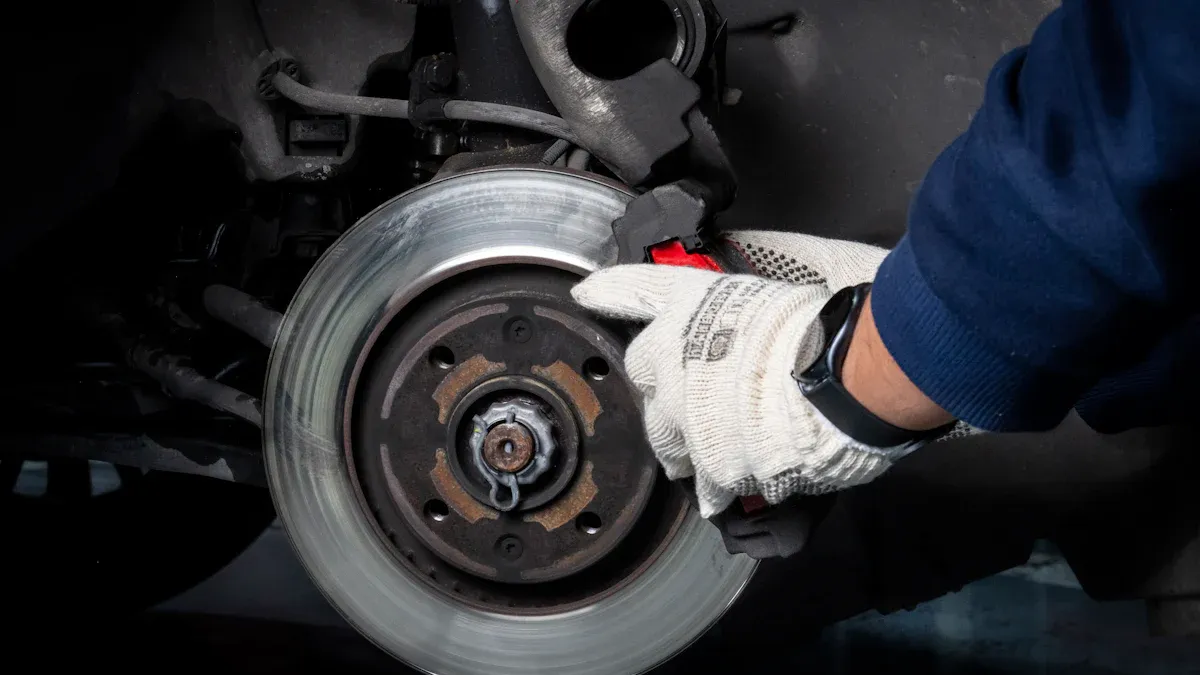
You might wonder how to tell when your brake pads need replacing. Paying attention to a few clear signs can help you stay safe and avoid bigger problems.
Have you ever heard a high-pitched squeal when you press the brakes? That sound is not just annoying. Manufacturers design brake pads with metal tabs that make this noise when the pads wear thin. The squealing usually starts quietly and gets louder over time. You will often hear it at lower speeds, and it happens almost every time you brake. This sound is a built-in warning that you need to check your brake pads soon.
Characteristic | Description |
|---|---|
High-Pitched Squeal | Loud, hard to ignore, and happens at low speeds |
Design Purpose | Metal tabs create noise when pads are thin |
Safety Feature | Alerts you before pads wear out completely |
Progressive Intensity | Gets louder as pads wear down |
If you hear a grinding noise, you should act fast. Grinding means the brake pads have worn down so much that metal touches metal. This can damage your rotors and make repairs more expensive. Grinding is a sign you should replace your brake pads right away.
Do you notice your car takes longer to stop? Maybe you have to press the brake pedal harder than before. As brake pad thickness drops, your braking power goes down. New brake pads are about 1.5 cm thick. If they wear down to 0.3 cm, you need to replace them to stay safe. Thinner pads mean slower stops and more risk on the road.
Braking performance drops as pads get thinner.
You need to press the pedal deeper to stop.
Replace pads when they get close to 0.3 cm thick.
Modern cars have dashboard lights that warn you about brake problems. You might see a yellow light for early wear or a red light for serious issues. Some cars show a digital display with the remaining pad life. If you see any of these, plan to check or replace your brake pads soon.
Warning Stage | Meaning | Required Action |
|---|---|---|
Yellow Light | Early wear detection | Plan maintenance |
Red Light | Critical wear level | Immediate service needed |
Digital Display | Remaining pad life | Schedule service accordingly |
You can also check your brake pads by looking at them. If you see less than 1/4-inch of pad left, it is time for new ones. Look for cracks, damage, or leaks around the brakes. Compare the pad thickness to the metal backing. If the pad looks thin or worn, replace it soon.
Check for visible wear, cracks, or leaks.
Measure pad thickness.
Compare friction material to the metal backing.
Tip: Regular checks help you catch problems early and keep your brakes working their best.
You want your brake pads to last as long as possible. Good news—you can do a lot to help them go the distance. Here are some simple tips that make a big difference for your braking system.
Try to brake gently instead of slamming on the pedal. Smooth braking keeps your brake pads cooler and reduces stress. When you stop slowly, you create less heat and friction. This helps your brake pads wear down more slowly. Studies show that gentle braking leads to more even wear and longer life for your braking system. You will also notice your ride feels smoother and safer.
Don’t wait until you hear a squeal or feel a problem. Check your brake pads often. Most experts suggest looking at your brakes every 10,000 to 15,000 miles. If you drive in the city, check them every 6 to 8 months. Regular brake maintenance helps you catch problems early and avoid costly repairs. You should also plan for brake pad replacement every 30,000 to 70,000 miles, depending on your driving style and vehicle.
Recommendation | Frequency |
|---|---|
Brake pad checks | Every 10,000–15,000 miles |
Brake pad replacement | Every 30,000–70,000 miles |
Tip: Set a reminder on your phone or calendar so you never forget a brake check.
Carrying too much weight puts extra pressure on your braking system. Heavy loads make your brake pads work harder and wear out faster. For example, SUVs and trucks with extra weight can double the heat on the brakes. If you tow a trailer or haul heavy gear, try to lighten your load when you can. This simple step can help your brake pads last much longer.
Not all brake pads are the same. High-quality pads use better materials that handle heat and friction well. Harder materials and special additives, like those found in Talfri Brakes, help reduce wear and keep your braking system strong. Certified, high-quality brake pads also form a protective layer that cuts down on wear. Choosing trusted brands means you get better performance and safety for your vehicle.
Tip for Extending Brake Pad Life | Description |
|---|---|
Material Composition | Good materials lower wear and boost performance. |
Hardness of Brake Pad Material | Harder pads last longer and stay strong under stress. |
Formation of Tribofilm | Special additives create a layer that protects pads. |
When you pick certified, high-quality brake pads like Talfri Brakes, you invest in safety and durability. Your braking system will thank you!
You want your brake pads to last a long time. Most brake pads work for 30,000 to 70,000 miles. Some pads wear out at 20,000 miles. Others can last up to 100,000 miles. Listen for squealing or grinding sounds. These noises mean your brake pads might be worn out. Regular checks help you find problems early. Here are times to visit a mechanic:
Inspection Frequency | Recommendation |
|---|---|
Every 6,000 miles | Good for regular brake checks |
Every 10,000 to 12,000 miles | Follow what the manufacturer suggests |
Twice a year | Helps keep you safe |
Pick certified brake pads from trusted brands like Talfri Brakes. Check your brakes often to stay safe. Ask a mechanic if you are not sure.
You should check your brake pads every 10,000 to 15,000 miles. If you drive in the city or in tough conditions, check them more often. Regular checks help you stay safe and avoid big repair bills.
If you ignore worn pads, your car may take longer to stop. You might hear grinding noises. This can damage your rotors and cost you more money. Always replace worn pads quickly.
Yes, you can replace them if you have the right tools and some experience. If you are not sure, ask a mechanic for help. Safety comes first when working on brakes.
No, different cars need different pads. Some use organic, semi-metallic, or ceramic pads. Always check your owner’s manual or ask a professional before you buy new pads.


