
Views: 187 Author: Site Editor Publish Time: 2026-04-10 Origin: Site


Selecting optimal braking components requires moving past marketing claims about "stopping power." You must analyze the specific friction materials, thermal thresholds, and mechanical structures required for your vehicle. Why does this matter? The wrong choice severely degrades system performance. Premature rotor wear, terrifying heat fade, and inconsistent bite often result from mismatched compounds. Whether outfitting a daily commuter, a heavy-duty electric vehicle, or high-torque industrial equipment, finding the right fit ensures safety. It also maximizes component efficiency without compromising reliability. This guide provides a detailed technical framework to help you navigate these complex choices. You will learn how to evaluate various pad compounds based on precise engineering principles. We will show you how to verify system compatibility to avoid catastrophic mechanical failures. Finally, you will discover the exact protocols needed to execute a flawless installation. Let us dive into the mechanics of reliable deceleration.
Material dictates performance: The choice between a resin base, semi-metallic, or ceramic compound defines your thermal capacity, noise levels, and rotor lifespan.
Application over upgrades: "Upgrading" to track-focused metallic pads for a daily driver often results in poor cold-bite performance and excessive noise.
Structural details matter: Premium pads utilize chamfers, gas slots, and multi-layer shims to manage vibration and dust evacuation.
Implementation risk: Changing pad compounds without replacing or resurfacing the rotor violates the "material transfer" rule, severely compromising braking efficiency.
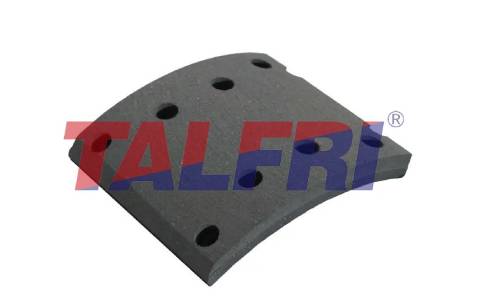
Friction material composition acts as the foundation of your braking system. Manufacturers blend various elements to achieve specific performance targets. You must match these chemical formulations to your specific mechanical demands.
Composition: These pads use Non-Asbestos Organic (NAO) materials. Manufacturers bind these organic elements together using high-temperature resins.
Performance Profile: They deliver exceptional initial cold bite. You will experience near-silent operation right out of the box. A resin base allows for a highly rapid bed-in process. Drivers and riders appreciate the predictable linear modulation they offer.
Limitations: They remain highly prone to thermal fade under sustained heavy loads. You will notice accelerated wear in wet or abrasive conditions. They also carry a higher risk of surface glazing when pushed beyond their temperature thresholds.
Best Practice: Always monitor your system temperatures. If you frequently navigate long descents, monitor your pedal or lever feel closely for early signs of mushiness.
Composition: These formulations contain 30% to 60% metal fibers. Common metals include steel, copper, or iron. Engineers mix these metals with synthetic lubricants and organic fillers.
Performance Profile: They represent a highly versatile option. They maintain a broad operating temperature range. You gain exceptional heat dissipation and structural integrity under heavy loads. Interestingly, this robust formulation is identical in principle to heavy-duty semi-metallic brake lining for clutch brakes and industrial high-torque applications. They thrive when dissipating massive kinetic energy.
Limitations: They generate noticeable black brake dust. They are highly abrasive to rotors. You must employ careful acoustic management, like utilizing quality shims, to prevent severe squeal.
Composition: Manufacturers fuse raw metallic particles together. They use extreme heat and massive pressure in a process called sintering.
Performance Profile: They offer maximum resistance to heat fade. They can operate consistently at temperatures exceeding 1000°F (537°C). Water or thick mud remains virtually unnoticeable to them. They serve as the ideal choice for track days, downhill racing, or heavy towing.
Limitations: You will experience remarkably poor initial bite when the system is cold. They carry a high potential to transfer heat directly into the caliper fluid system. They act aggressively on rotors, accelerating rotor thinning.
Common Mistake: Never install sintered pads on standard commuter vehicles. They will squeal violently and fail to stop the vehicle effectively during short neighborhood trips.
Composition: These pads feature dense ceramic fibers. Manufacturers combine these fibers with copper or brass threads to aid heat transfer.
Performance Profile: They produce ultra-low, non-adhesive dust output. Your wheels stay much cleaner. They maintain a highly stable friction coefficient over a long lifespan. They also provide excellent NVH (Noise, Vibration, and Harshness) dampening.
Limitations: Engineers do not rate them for heavy towing or aggressive track use. They also struggle to retain heat in extreme cold environments.
Choosing a compound in isolation often leads to mechanical disappointment. You must analyze the holistic scenario. Vehicle weight, driving environment, and kinetic energy dictate your optimal setup.
Light vehicles include sedans, crossover SUVs, and road or gravel bicycles. These machines operate primarily in stop-and-go environments. They rarely reach extreme thermal thresholds.
Success Criteria: Low noise, low dust, predictable linear modulation.
Optimal Choice: Ceramic compounds work beautifully for cars. Resin compounds serve bicycles perfectly.
Electric vehicles (EVs), E-Bikes, and heavy towing rigs present unique challenges. They carry massive battery weights. Furthermore, EV regenerative braking alters traditional mechanical usage.
Success Criteria: Managing extreme kinetic energy and preventing rust. Because regenerative braking handles most deceleration, mechanical brakes sit unused. This increases rotor corrosion risk dramatically.
Optimal Choice: Select EV-specific anti-corrosion compounds. Alternatively, run heavy-duty semi-metallic or oversized sintered pads to handle the sheer mass when emergency stops occur.
Track days, autocross, and downhill mountain bike racing generate terrifying amounts of heat. Standard materials vaporize under these conditions.
Success Criteria: Sustained high-temperature threshold and absolute fade resistance.
Optimal Choice: Sintered pads boasting rated operating temperatures exceeding 1000°F.
Advanced Tactic: Consider "staggered setups." You might use a highly aggressive organic compound on the front axle for precise control. You then pair it with a durable sintered compound on the rear for longevity.
The table below summarizes essential operational metrics to streamline your decision process.
Compound Type | Cold Bite | Heat Tolerance | Dust Output | Rotor Wear |
|---|---|---|---|---|
Resin / Organic | Excellent | Low to Medium | Medium | Very Low |
Semi-Metallic | Good | High | High | Medium |
Sintered / Metallic | Poor | Extreme (1000°F+) | Medium | High |
Ceramic | Average | Medium | Very Low | Low |
Friction material alone does not guarantee superior performance. The physical architecture of the pad dictates how it interacts with the caliper and rotor. Premium manufacturers integrate specific structural details to manage heat, gas, and acoustic energy.
Function: Manufacturers machine angled cuts onto the leading and trailing edges of the friction material.
Outcome: This geometry prevents the pad's rigid edge from brutally catching the spinning rotor. It drastically reduces low-speed squeal. It also improves initial pad-to-rotor contact by allowing a smoother physical transition during engagement.
Function: Engineers cut vertical or diagonal channels directly into the pad surface.
Outcome: Resins vaporize under extreme heat. This creates a boundary layer of gas between the pad and rotor. Center slots provide a critical escape route for this outgassing. They also clear friction dust and debris. This mechanical clearing action prevents the surface from glazing over.
Function: Premium designs feature rubber-coated steel backing plates. They also utilize physical hook systems, such as Nucap Retention System (NRS) technology.
Outcome: Shims act as acoustic barriers. They absorb high-frequency vibrations before those vibrations reach the caliper piston. Meanwhile, mechanical hooks physically embed into the friction material. This prevents the friction puck from delaminating from the steel backing plate under extreme shear stress.
Executing a perfect installation requires strict adherence to mechanical rules. Many enthusiasts buy the right parts but fail during the final integration phase. You must avoid common pitfalls to ensure system safety.
Risk: Many people blindly order replacement Disc Brake Pads based on the brake lever or pedal model. This often leads to receiving incompatible parts. Manufacturers frequently pair different levers with entirely different calipers.
Solution: Always pull the existing pad from the assembly. Verify the stamped serial number directly on the steel backing plate. Cross-reference this exact code against the manufacturer's technical catalog.
Concept: Braking systems do not stop solely via abrasive friction. They work by transferring a microscopic layer of pad material directly onto the iron or steel rotor. Friction is actually generated by the pad rubbing against its own transferred material layer.
Actionable Rule: If you switch pad compounds, you face a strict mechanical law. Moving from a resin to a sintered compound means you must replace or machine the rotors. Mixing different compounds on the exact same rotor leads to uneven material transfer. You will experience severe judder, terrifying vibrations, and heavily compromised stopping power.
Requirement: You cannot subject new pads to maximum force immediately. Doing so induces thermal shock and ruins the material structure.
Process: You must execute a strict series of controlled, moderate decelerations. Accelerate to medium speeds. Brake firmly but smoothly. Do not come to a complete stop. Release the brakes and accelerate again. Repeat this cycle to slowly cure the resins. This establishes the critical initial material transfer layer on the rotor face.
Navigating the vast aftermarket requires a disciplined approach. Follow this precise logic path to finalize your hardware selection.
Audit your failure mode. You must ask why you are replacing your current setup. Did the old pads glaze over and turn shiny? You need a higher heat threshold. Move toward a semi-metallic option. Did they wear out your expensive rotors too quickly? Move toward a gentler organic or ceramic option.
Verify caliper clearance and rotor thickness. Grab your digital calipers. Ensure your current rotors meet the stamped minimum thickness specifications. A fresh set of pads cannot save a dangerously thin rotor from warping.
Source OEM or verified Aftermarket parts. Prioritize manufacturers who operate with transparency. Look for brands that publish exact temperature ratings and measured friction coefficients. Ignore generic "heavy duty" marketing language. Demand engineered data.
By applying these principles, you eliminate guesswork. You match chemical formulas to kinetic realities. Your vehicle will stop consistently, quietly, and safely across its intended operational envelope. Execute the installation carefully, respect the material transfer law, and always complete the bedding-in protocol.
A: Yes. A common performance strategy is using a high-bite compound like an organic resin on the front for steering control. You then run a durable, heat-resistant compound like sintered metal on the rear for longevity and stability.
A: They likely have not been properly bedded in. Without an initial heat cycle and a material transfer layer on the rotor, they will lack initial bite. Additionally, the hydraulic system might need bleeding if pistons were compressed improperly during installation.
A: Glazed pads exhibit a shiny, crystallized surface. They produce a high-pitched squeal and provide severely diminished stopping power. While light glazing can sometimes be removed with fine-grit sandpaper, deep glazing indicates you exceeded the temperature limit. You need a compound change.


