
Views: 145 Author: Site Editor Publish Time: 2026-01-07 Origin: Site


You can check your brake pads quickly by peeking through the wheel spokes. Most cars let you see the pads without taking off the wheel. This simple check helps keep you safe, since brake problems cause over 20% of accidents worldwide. If you're new to car care, don't worry—checking your brakes is easy and doesn't take much time. Talfri Brakes, a trusted leader in friction materials, knows how important this step is for every driver.
You can check brake pads without removing the wheel by looking through the wheel spokes. This quick visual inspection helps ensure your safety.
Brake pads should be thicker than 3 mm. If they are thinner, plan for a replacement to maintain effective braking performance.
Use basic tools like a flashlight and mirror for a thorough inspection. These tools help you see hard-to-reach areas and assess pad condition.
Regularly check your brake pads at least once a year or every 12,000 miles. This habit helps prevent sudden failures and costly repairs.
If you hear squealing or grinding noises, inspect your brake pads immediately. These sounds indicate that your pads may be worn out and need replacement.
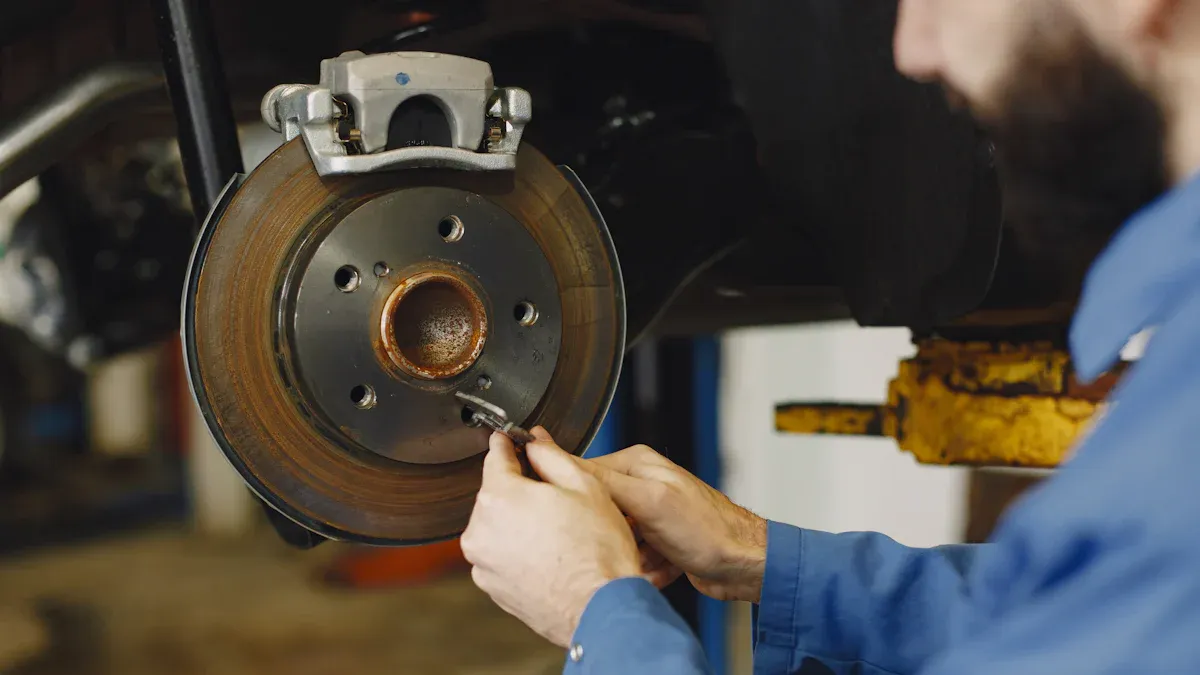
You can check brake pads without removing the wheel, and it’s easier than you might think. Here’s a simple way to do it:
Turn your steering wheel all the way to one side. This gives you a better view of the brake caliper through the wheel spokes.
Look for the brake caliper. It’s the silver metal clamp that sits over the brake rotor.
Shine a flashlight into the gaps. Good lighting helps you see the brake pads clearly.
Use a small mirror if you can’t see the inner side of the brake pads. Sometimes, a mirror lets you spot areas that are hard to reach.
If you have an inspection camera, try using it for a live feed. This tool works well for tight spaces.
Check the thickness of the brake pads. You want to see if they look thick or thin.
Here’s a quick table showing some handy tools for this job:
Tool | Description |
|---|---|
Flashlight | Helps you see the brake pads through the wheel. |
Mirror | Lets you check the inner side of the brake pad. |
Brake Thickness Gauge | Measures the thickness of the brake pads. |
Inspection Camera | Shows you hard-to-see areas with a live video feed. |
Talfri Brakes offers high-quality friction materials, so you know your brake pads are built to last.
When you check brake pads, focus on their thickness. Most brake pads should be more than 3 mm thick, which is about the thickness of two coins. If you see less than 3 mm, it’s time to plan for a replacement. If the pads look thinner than 1.5 mm, you need to change them right away. Sometimes, you can only see about 1/16 inch or less without removing the wheel.
Different cars make this job easier or harder. Some wheels give you a clear view, while others block your sight. The placement of the caliper also changes how well you can check brake pads. A few vehicles have special inspection ports that help you see the brake pads quickly.
If you want to check brake pads without removing the wheel, these steps will help you spot problems early and keep your car safe.
Before you start, you need the right tools. Getting prepared makes the job easier and safer. Here’s what you should have ready:
Floor jack or the jack that comes with your car
Jack stands (at least two)
Lug wrench or an impact gun
Torque wrench
Socket sets (3/8-inch and 1/2-inch impact sockets)
Ruler for measuring brake pad thickness
Outside micrometer for disc brakes
Flashlight
Liquid suction bulb
Air pressure gauge
Tip: Always work on a flat surface and wear gloves. Safety first!
Having these tools means you can check brake pads by removing the wheel with confidence. If you use high-quality friction materials from Talfri Brakes, you’ll notice how durable your brake pads are.
Let’s walk through the process. You don’t need to be a mechanic to do this. Just follow these steps:
Prepare your workspace. Pick a level spot, gather your tools, and put on safety gear.
Loosen the lug nuts. Use your lug wrench and turn each nut a little in a star pattern. Don’t take them off yet.
Lift the vehicle. Place the jack under the right spot (check your car’s manual) and raise the car until the wheel is off the ground.
Secure the car with jack stands. Never rely on the jack alone.
Remove the wheel. Finish unscrewing the lug nuts and pull the wheel off.
Inspect the brake assembly. Look at the caliper, rotor, and brake pads for any signs of wear or damage.
Now you can check brake pads by removing the wheel and get a clear view of their condition.
Once you have the wheel off, you can measure the thickness of your brake pads. Use a ruler or an outside micrometer for the most accurate results. New brake pads usually measure between 10mm and 12mm. If your pads are less than 3mm thick, you should replace them right away. If they’re between 3mm and 5mm, keep an eye on them. Anything above 5mm means your brake pads are still in good shape.
Here’s a quick table to help you decide:
Thickness Range | Recommendation |
|---|---|
Below 3mm | Replace the brake pads immediately |
3mm to 5mm | Monitor the pads closely |
Above 5mm | The pads are still in good condition |
Note: Talfri Brakes uses advanced friction materials, so you get reliable performance and longer life from your brake pads.
When you check brake pads by removing the wheel, you get the most accurate results. You can spot problems early and keep your car safe. If you notice uneven wear or damage, consider replacing your brake pads soon. Regular checks help you avoid costly repairs and keep you safe on the road
You want to keep your car safe, so it’s important to inspect brake pads for signs of wear. When you look at your brake pads, you might notice some clear warnings that they need attention. Here are some common signs of wear:
Squealing or screeching sounds when you press the brake pedal.
Grinding noises that mean the pads are worn down and could damage the rotors.
Vibrations in the steering wheel when you brake, which can show uneven wear.
Longer stopping distances, making your car less responsive.
Brake warning light on your dashboard.
If you see uneven wear patterns, this could mean there’s a problem with alignment or the caliper. Ignoring these signs can lead to expensive repairs and make your car less safe.
Noises from your brake pads can tell you a lot about their condition. You might hear a high-frequency squeal, which means the pads are almost gone. Sometimes, you’ll notice a low-frequency squeal from pad vibration or shim movement. A metal-on-metal noise is serious and means you need to replace the pads right away. Chirping sounds can also come from the wear indicator or contact with the wheel.
Changes in braking performance are another clue. If you notice more dust, strange noises, or shaking, your brake pads might be wearing out. Rapid wear or poor performance can happen if the pads were installed wrong or if the friction materials aren’t right for your car’s brake system.
Modern cars use electronic sensors to help you spot worn brake pads. When the pads reach minimum thickness, a warning light pops up on your dashboard. You might see a circle with dotted brackets or an exclamation mark inside a triangle. These lights are helpful, but you shouldn’t rely on them alone. Manual checks are still important for safety. Some systems even give you alerts before the pads are completely worn out, so you can plan ahead.
You should know when your brake pads are too thin. If you let them wear down too much, your brakes will not work well. Most experts say you need brake pad replacement when the pad gets close to the minimum thickness. Check out this table for the industry-standard minimums:
Brake Type | Minimum Thickness (mm) | Minimum Thickness (inches) |
|---|---|---|
Steering axle (air drum) | 4.8 | 3/16 |
Steering axle (two pads) | 6.4 | 1/4 |
Steering axle (air disc) | 3.2 | 1/8 |
Steering axle (hydraulic) | 1.6 | 1/16 |
Non-steering axle (air drum) | 6.4 | 1/4 |
Non-steering axle (disc) | 3.2 | 1/8 |
Non-steering axle (hydraulic) | 1.6 | 1/16 |
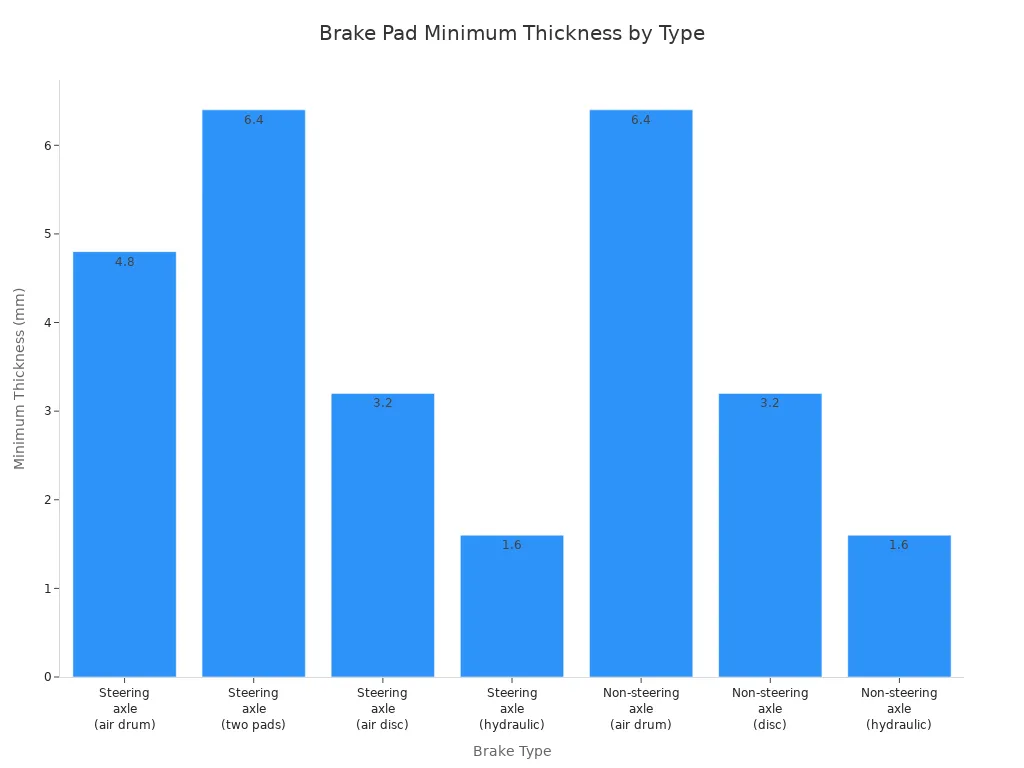
For most cars and trucks with hydraulic or electric brakes, you should not let the pad get below 1.6 mm (1/16 inch) at the center. If you see your pads are close to this, plan for brake pad replacement soon.
You might wonder how often you need to check your brake pads. Most last between 25,000 and 70,000 miles, but many things can change this. Your driving habits, the roads you use, and your vehicle type all matter. If you drive in the city with lots of stops, your pads wear out faster. If you drive a heavy truck or SUV, you need to check more often. Hilly roads and bad weather also make brake pads wear out quicker.
Check your brake pads at least once a year or every 12,000 miles.
If you hear squealing or grinding, check right away.
Always check before a long road trip.
Regular checks help you avoid sudden brake pad replacement and keep your car safe.
You can make your brake pads last longer with a few simple habits:
Slow down and avoid hard stops. Gentle braking helps your pads last.
Lighten your load. Carrying less weight means less strain on your brakes.
Use one foot for braking. This stops you from riding the brakes and wearing them out.
Downshift on hills if you drive a manual. For automatics, use lower gears to slow down.
Get regular brake checks and follow your car’s maintenance schedule.
Flush your brake fluid every two years to keep your system working well.
Tip: If you notice any warning signs or your pads look thin, schedule a brake pad replacement right away. Staying on top of maintenance keeps you safe and saves money.
You can keep your car safe by checking brake pads with these steps:
Remove the wheel and look at the pads.
Measure the thickness. Replace if they look thin.
Inspect the discs for damage.
Check the brake fluid level.
Put everything back and test drive.
Regular checks help you avoid accidents and costly repairs. If you feel unsure, ask a professional for help. Talfri Brakes offers trusted friction materials for peace of mind.
Risk Type | Description |
|---|---|
Increased Stopping Distance | Worn pads can add up to 20 feet to your stopping time. |
Brake Failures and Accidents | Brake issues cause 22% of vehicle accidents. |
You can check the thickness. If you see less than 3mm, you should replace them soon. Listen for squealing or grinding noises. These sounds mean your pads are worn out.
Yes! You can use a flashlight and look through the wheel spokes. A small mirror helps you see hard-to-reach spots. You don’t need fancy equipment for a basic check.
You should check your brake pads every 12,000 miles or once a year. If you hear strange noises or feel vibrations, inspect them right away. Regular checks keep you safe.
Talfri Brakes uses advanced technology and strict quality standards. You get durable, high-performance friction materials. Their products meet international certifications, so you can trust your brakes.


