
Views: 142 Author: Site Editor Publish Time: 2026-02-22 Origin: Site


Riding a bicycle or operating a vehicle with worn braking components is not just a maintenance oversight; it is a direct gamble with safety. Disc brake pads are consumable items designed to degrade over time, sacrificing themselves to stop your momentum. Unfortunately, many riders treat them as "set and forget" components until a catastrophic noise or failure occurs. The cost of delay extends far beyond the price of a new set of pads. Running them too thin risks destroying expensive rotors, damaging caliper pistons, and compromising hydraulic seals due to excessive heat transfer.
A common misconception is that mileage dictates maintenance schedules. In reality, mileage is a dangerously poor metric for braking systems. Wear rates depend entirely on your terrain, the weather conditions, and the specific pad compound you use. A downhill rider in gritty mud might destroy a set of pads in a single weekend, while a road commuter in dry conditions could go months without issue. This guide moves beyond generic advice to provide a specific decision framework. You will learn visual and tactile measurements to determine exactly when your system is serviceable, when it is showing warning signs, and when it has reached a critical failure point.
The Golden Rule (Thickness): For most cycling disc brakes, total thickness (backing plate + material) under 3mm is the replacement threshold.
The Visual Shortcut: If the friction material looks thinner than the backing plate holding it, order replacements immediately.
Resin vs. Metal: Resin (organic) pads offer better modulation and silence but wear significantly faster in wet/gritty conditions than metallic options.
The "False" Positive: Squealing doesn't always mean wear; it often indicates contamination or glazing, which still requires pad replacement or servicing.
Waiting for your brakes to fail is not a strategy. You need immediate diagnostic criteria to make safe decisions before you head out on a ride. We categorize these indicators into quantitative measurements, tactile feedback, and visual warnings. Understanding these signs answers the common question: How do you know when to replace the pads in your disc brakes? It usually starts with a measurement.
Industry giants like SRAM and Shimano have established specific benchmarks for safety. The most reliable standard involves measuring the combined thickness of the metal backing plate and the friction material.
When this total thickness drops below 3mm, the system is compromised. Is 3mm on brake pads ok? If you are measuring the total width including the backing plate, the answer is no—you are at the absolute limit.
Material Depth: If you cannot measure the total thickness, look strictly at the friction material (the pad compound itself). If this material is less than 1mm thick—roughly the width of a standard credit card or a dime—the pad is expired. At this depth, heat transfer to the caliper accelerates rapidly, risking brake fade.
The Spring Clip Rub: Most braking systems use a small metal spring to push pads apart after braking. As the pad material thins, this spring moves closer to the rotor. If you hear a metallic "tinking" or light scraping sound while the wheel turns, the spring is likely hitting the rotor. This is your mechanical alarm bell indicating the material is critically low.
Your hands often detect wear before your eyes do. As the pads wear down, the physics of the hydraulic system change slightly, altering the feel at the handlebar.
Increased Travel: As the friction material thins, the caliper pistons must extend further to push the pad against the rotor. This often results in the brake lever pulling closer to the handlebar or grip before the pads engage. If you find yourself adjusting the "reach" of your levers just to get them to bite, check your pads immediately.
Inconsistent Bite: A "spongy" feel or a lack of initial grab can indicate that the pistons are over-extended or that the pads are wearing unevenly. While air in the line also causes sponginess, it frequently coincides with worn pads that have forced the pistons past their optimal operating range.
If you look closely at the caliper, the mechanics of the system reveal its health.
The "Pistons Exposed" Check: Caliper pistons are designed to sit mostly inside the caliper body. When pads are extremely thin, you will see a significant amount of the piston cylinder exposed as it pushes the pad inward. Exposed pistons are vulnerable to dirt and corrosion, which can cause them to seize.
Uneven Wear: Inspect the pad surface for "tapered" wear. This happens when the top of the pad remains thick while the bottom edge is paper-thin. This indicates a caliper alignment issue. Even if part of the pad looks new, the thin edge dictates that a disc brake pads replacement is necessary to prevent rotor damage.
Not everyone carries a digital caliper or a ruler on every ride. Fortunately, you can reduce the friction of diagnosis by using relative measurements. These methods allow you to assess safety in seconds, often without even removing the wheel from the bike.
This method relies on a visual constant: the steel backing plate. Regardless of the brand, the metal plate holding the friction material is usually between 1.5mm and 2mm thick. You can use this as your reference point.
Look at the side profile of the pad. Compare the thickness of the friction material (the dark stuff) to the steel backing plate (the shiny stuff).
Safe Zone: Friction material is thicker than the backing plate.
Warning Zone: Friction material is equal to the backing plate.
Danger Zone: Friction material looks thinner than the backing plate. If the material is half the thickness of the plate, replace it immediately.
For a quick check, shine a flashlight through the top or back of the caliper body. You are looking for the "daylight gap" between the rotor and the pad material.
This angle allows you to see the depth of the pad remaining inside the caliper housing. While less precise than removing the pads, it instantly reveals if you are running metal-on-metal. If the return spring looks like it is sandwiched tight against the rotor with no visible pad material buffering it, you have gone too far.
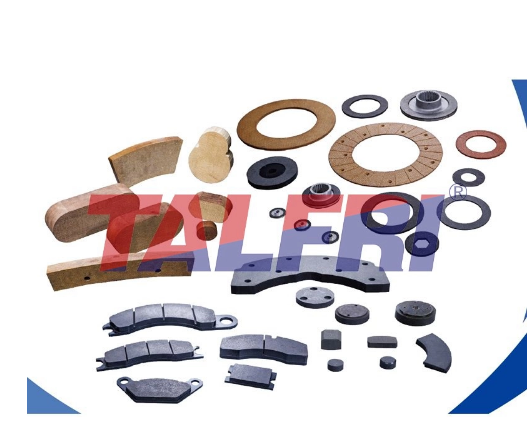
The type of pad you choose drastically dictates how often you will be performing maintenance. The two primary categories are sintered (metallic) and resin base (organic) pads. Understanding their properties helps you predict wear based on your riding conditions.
Resin pads are made from organic fibers bonded with resin. They are the standard for many new bikes because they are quiet and offer excellent modulation.
Wear Profile: Because the material is softer, it wears rapidly in abrasive conditions. If you ride in wet, sandy, or muddy environments, the grit acts like sandpaper. It is not uncommon for a set of resin pads to disappear completely during a single wet, gritty descent.
Glazing Risk: Resin pads are sensitive to heat. On long, dragging descents, they can overheat and "glaze." The surface turns shiny and hard, effectively losing its friction properties. Even if the pad is 3mm thick, a glazed resin pad requires replacement or heavy sanding to restore stopping power.
Sintered pads are made of fused metallic particles. They are the workhorses of gravity riding and heavy-duty use.
Wear Profile: These are significantly harder than resin. They can last 2 to 3 times longer in standard conditions and are highly resistant to mud and grit. However, physics demands a trade-off: because the pad is harder, it causes faster wear on your rotors.
Evaluation Shift: When you switch to metallic pads, your maintenance check must shift focus. You will change pads less often, but you must check your rotor thickness more frequently.
| Riding Condition | Recommended Compound | Maintenance Expectation |
|---|---|---|
| Dry / Summer / Urban | Resin (Organic) | Standard wear. Excellent initial bite and silence. |
| Wet / Mud / Grit | Sintered (Metallic) | Resin pads may dissolve in weeks. Sintered ensures longevity. |
| Long Alpine Descents | Sintered (Metallic) | Resin risks glazing/fading from heat. Metallic handles high temps better. |
| Rotor Longevity Priority | Resin (Organic) | Sacrifice pads to save expensive rotors. |
Many riders delay replacement to "get their money's worth" out of the remaining millimeter of material. This is a false economy. The Total Cost of Ownership (TCO) skyrockets when you push pads beyond their limit.
Hydraulic calipers are precise instruments. The pistons are designed to operate within a specific range of motion. When brake pads become paper-thin, the pistons must extend dangerously far out of the caliper body to contact the rotor.
When over-extended, pistons lose lateral support. They can tilt or "cock" within the bore, leading to them getting stuck. Worse, this extension exposes the delicate seals to debris, potentially causing brake fluid leaks. A simple $25 pad replacement can quickly turn into a $200 caliper rebuild or replacement if the seals are damaged.
The most immediate financial penalty of ignored maintenance is the rotor. Once the friction material is gone, the steel backing plate contacts the steel rotor.
This "metal-on-metal" grinding destroys the smooth braking surface of the rotor in seconds. Deep gouges render the rotor useless. Financially, you move from buying a set of pads (approx. $20–$30) to buying pads plus a new rotor (approx. $80–$150 depending on quality). Replacing pads early is essentially an insurance premium for your rotors.
Brake pads act as insulators. A thick block of friction material protects the caliper and the hydraulic fluid (Mineral Oil or DOT fluid) from the intense heat generated at the rotor. As the pad thins, that insulation barrier disappears.
Thin pads transfer heat directly into the caliper pistons and fluid. This can lead to the fluid boiling, causing "brake fade" where the lever pulls to the bar without stopping the bike. Furthermore, repeated "heat soak" can permanently damage the caliper seals, requiring a full system overhaul.
Thickness is not the only metric for health. You may have a set of pads with 4mm of material left that are utterly useless. How do I know if my brake pads and discs need replacing? Sometimes, it is about what the pad has absorbed, not how much it has worn.
Brake pad friction material is porous, functioning much like a dense sponge. If they come into contact with chain lube, brake fluid, degreaser, or even oily road spray, they absorb the contaminant deep into the compound.
The primary symptoms are a high-pitched squealing sound—often described as a "squeaky trumpet"—and a drastic reduction in stopping power. If you are pulling the lever with full force but simply sliding to a gradual stop accompanied by ear-piercing noise, your pads are likely contaminated.
Riders often try to save contaminated pads using sandpaper or a blowtorch to burn off the oil. While light surface glazing can sometimes be sanded off, deep oil contamination is usually terminal.
The heat from braking draws the oil back to the surface, bringing the squeal back within minutes. Given the low cost of pads relative to the risk of not being able to stop, replacement is the only reliable fix for oil contamination.
Finally, consider the relationship between the pad and the rotor. If you have worn a rotor down to its minimum thickness and are replacing it, you must replace the pads simultaneously. Old pads develop a wear pattern matching the grooves of the old rotor. Placing grooved pads on a fresh, flat rotor results in poor contact patch area and terrible braking performance until they wear in—which ruins the surface of your new rotor.
Effective brake maintenance relies on proactive monitoring rather than reactive repairs. The 3mm total thickness rule (or <1mm of friction material) serves as your hard stop. While it might be tempting to squeeze a few more miles out of a set of pads, the risk of caliper piston damage, rotor destruction, and brake fade makes it a gamble with negative odds.
Safety remains the single most critical component of any ride. Brakes that perform inconsistently compromise your confidence and control. The smartest strategy is to keep an inventory of spares. Buy two sets of pads: install one now, and keep the second in your toolbox. This eliminates the "downtime" excuse and ensures you never hesitate to replace a worn component.
A: It depends on how you measure. If you are measuring 3mm of just the friction material, yes, that is plenty of life. However, if you are measuring 3mm of total thickness (including the metal backing plate), then no—you are at the replacement limit. At this thickness, you risk the spring clip hitting the rotor and heat damaging your caliper seals. Change them immediately.
A: There is no set mileage because conditions vary wildly. A downhill rider in wet mud can destroy a set of resin pads in one weekend. Conversely, a road commuter in dry conditions might get 1,000+ miles. Visual inspection is the only reliable metric. Do not rely on odometer readings to determine safety.
A: Yes, provided the rotors are above their minimum thickness (usually marked on the rotor, e.g., "Min. TH 1.5mm") and are not deeply grooved or warped. However, if you replace the rotor, you should always replace the pads to ensure the new surfaces mate correctly.
A: Resin (organic) pads are quieter and offer better initial "bite" and modulation but wear down very fast in wet or gritty conditions. Sintered (metallic) pads are louder and handle high heat better, lasting significantly longer in bad weather, but they will wear down your rotors faster than resin pads.
A: Typically, no. The hydraulic system is sealed. However, you will need to push the caliper pistons back into the caliper body to make room for the new, thicker pads. If the pistons won't retract, you may have too much fluid in the system or a stuck piston, which might require a bleed or service.


