
Views: 137 Author: Site Editor Publish Time: 2026-08-22 Origin: Site


Equipment downtime drains operational budgets fast. A slipping, burned-out, or shattered clutch halts agricultural and industrial productivity instantly. Finding the exact replacement part poses a major procurement challenge. Aging, heavily modified, or legacy machinery often outlasts its original documentation. Relying on outdated manuals leads to mismatched parts and extended delays. You need a reliable framework to navigate this frustrating process.
We will explore how to identify, evaluate, and purchase the correct components effectively. You will learn to measure accurately and source confidently. This guide helps you secure the right parts without costly trial-and-error setbacks. We focus on practical methods to restore your equipment to peak performance.
Accurate physical measurement (OD, ID, thickness, spline count) is more reliable than relying solely on outdated equipment manuals.
The composition of the industrial clutch lining dictates heat dissipation, engagement smoothness, and overall lifespan under heavy torque.
Sourcing decisions should prioritize suppliers who offer verifiable OEM cross-referencing, clear warranty terms, and immediate availability.
Proper installation requires evaluating mating surfaces; a new disc will fail prematurely if installed against a warped pressure plate.
Many maintenance teams turn immediately to machinery manuals when a clutch fails. This approach frequently causes ordering errors. Older equipment often undergoes unrecorded retrofits over its lifespan. A previous owner might have installed a completely different Power Take-Off (PTO) assembly. Physical micrometer measurements remain mandatory for procurement accuracy. You must evaluate the actual part removed from your machine. Trusting an old schematic often yields components missing the required specifications. You waste valuable time returning incorrect items.
You must record critical dimensions to identify a correct replacement accurately. Grab a digital caliper and note these measurements down carefully.
Outside Diameter (OD): Measure straight across the widest point of the disc face.
Inside Diameter (ID): Measure across the inner hub or the spline opening.
Baseline Thickness: Measure the overall thickness of the unit. Remember to account for extreme wear. If the old part lacks friction material completely, estimate the lost depth. Add this value to find the original factory specification.
Common mistake: Do not assume standard metric or imperial sizes. Always measure down to the precise millimeter or thousandth of an inch.
Counting the splines correctly guarantees proper shaft engagement. You must count every internal tooth on the central hub. We recommend marking the first tooth to avoid counting it twice. A toothed friction disc must mesh seamlessly onto the input shaft. Incorrect spline counts prevent installation entirely. Poorly matching spline profiles will quickly strip the shaft under load. Always measure the peak-to-peak distance between individual splines for precise verification.
Examine the old PTO clutch disc for stamped identification numbers. These identifying marks usually sit near the solid central hub. Even partial numbers provide immense value during procurement. You can input these digits into a supplier's cross-reference database. This step connects legacy parts to modern equivalents effortlessly. Cross-referencing bridges the gap between obsolete part numbers and currently available stock. It removes the guesswork from matching vintage tractor components.
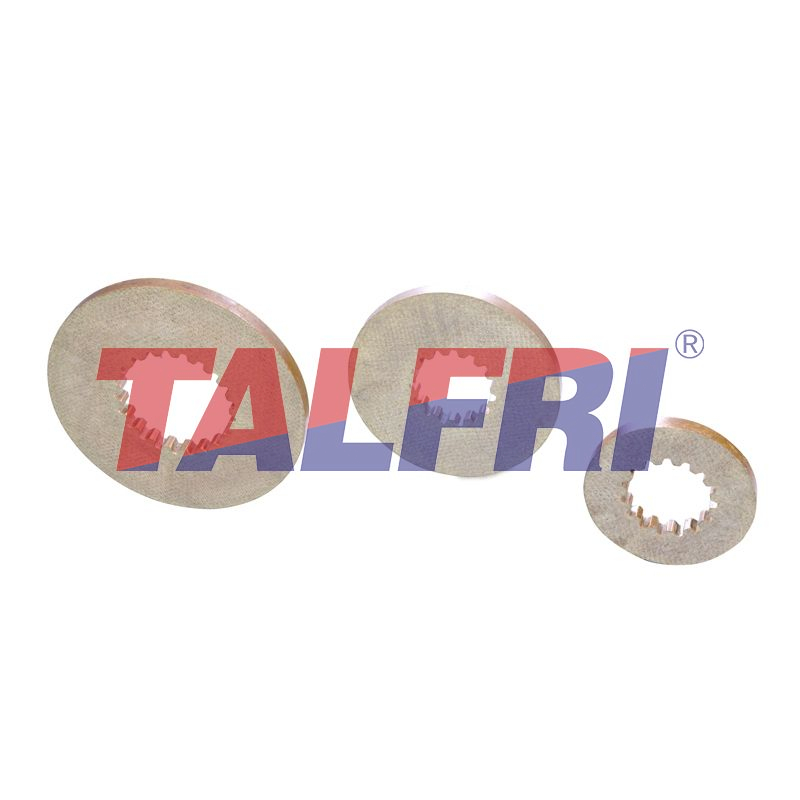
Material composition determines ultimate mechanical performance. Evaluating the industrial clutch lining helps you understand its operational limits. The material must provide an appropriate coefficient of friction. Different applications demand specific material properties. Continuous slip clutches generate intense heat over extended periods. Over-center clutches demand high grabbing power for sudden engagement. Choose a composition designed specifically for your exact load profile. Kevlar, sintered bronze, and organic compounds each offer distinct thermal dissipation characteristics.
Manufacturing methods impact structural strength heavily. A fully laminated friction disc bonds layers together under immense pressure and heat. This process eliminates the weak points found in older riveted designs. Traditional rivets can sheer under sudden torque spikes. Bonded plates distribute sheer stress uniformly across the entire surface area. This uniform distribution prevents catastrophic delamination during heavy industrial usage. You gain significant durability by upgrading to fully bonded structures.
You must distinguish between a genuine wear-resistant friction plate and cheap alternatives. Low-grade options often utilize excess filler material. They lack sufficient density to withstand rigorous daily use. A premium plate features densely packed friction composites. It resists glazing and powdering under high operating temperatures. Look for detailed material data sheets from the manufacturer. Authentic plates list specific density metrics and maximum heat tolerance thresholds. High-quality composites ensure smoother engagement cycles.
Certain scenarios strictly require Original Equipment Manufacturer (OEM) components. Machinery currently under active warranty typically mandates OEM replacements. Using aftermarket parts might void these valuable factory warranties. Highly specialized proprietary PTO systems also necessitate exact factory matches. Complex industrial systems often rely on very tight internal tolerances. Deviating from original specifications introduces unacceptable mechanical risks. In these strict environments, you must purchase direct factory replacements.
The aftermarket presents substantial benefits for many operators. It offers notable cost-efficiency and superior component availability. Obsolete or vintage tractors greatly benefit from robust aftermarket support. OEM parts for legacy machines are frequently discontinued. Aftermarket manufacturers actively fill this supply chain void. They produce parts meeting or exceeding original structural standards. You can often find upgraded materials unavailable during the original manufacturing run.
You must remain vigilant during procurement. Red flags indicate subpar aftermarket components clearly. Avoid suppliers hiding technical data. Transparency indicates quality manufacturing.
Inconsistent thickness tolerances across the disc face.
Missing ISO compliance data or testing certifications.
Vague material specifications hiding high filler content.
Rough or unmachined spline edges.
Absence of clear warranty documentation.
Evaluation Criteria | OEM Components | Aftermarket Components |
|---|---|---|
Warranty Compliance | Maintains active equipment warranties securely. | May void active factory warranties immediately. |
Availability | Subject to frequent factory backorders. | Often stocked by multiple independent distributors. |
Legacy Support | Often discontinued for older equipment models. | Excellent coverage for vintage and legacy machinery. |
Tolerances | Strictly adheres to exact factory specifications. | Varies wildly; requires careful supplier vetting. |
A strong supplier offers robust technical assistance. You need their expertise when original part numbers become illegible. Evaluate if they can verify fitment using raw dimensional data alone. A knowledgeable technician will cross-reference your measurements effectively. They should guide you toward the correct match without relying solely on a part number. Avoid vendors unwilling to discuss technical dimensions over the phone.
Inventory depth matters immensely for heavy industries. Extended machinery downtime kills operational productivity. Assess a supplier's ability to ship critical components immediately. Ask about their local stocking locations and daily shipping cutoff times. A reliable partner maintains healthy stock levels for standard industrial sizes. They should offer expedited shipping options for severe emergency breakdowns. Consistent supply chain speed separates average vendors from exceptional partners.
Procurement requires reviewing commercial terms carefully. Mistakes happen frequently during the identification process. You must understand the return policy for mismatched parts. A fair return policy reduces your financial risk significantly. Additionally, review the warranty coverage thoroughly. The warranty must protect against premature delamination or catastrophic material failure. Read the fine print to understand what constitutes a valid warranty claim. Good terms protect your initial investment.
Installation involves more than merely swapping a part. You must inspect the mating surfaces thoroughly. Check the pressure plates and flywheels before installing the new component. Look closely for heat-checking, deep grooving, or significant glazing. A warped pressure plate destroys a new disc rapidly. Uneven surfaces create localized hot spots. You must resurface or replace damaged mating components to ensure longevity. Best practice: Use a straight edge to verify flywheel flatness.
Friction materials absorb fluids easily. You must prevent contamination during the installation process. Oil, grease, and hydraulic fluid ruin friction coefficients instantly. Clean your hands and tools before handling the fresh part. Inspect the rear main seal and gearbox seals for leaks. A leaking seal will soak the new assembly within hours. Rectify all fluid leaks prior to final component assembly. Use non-chlorinated brake cleaner to prep steel surfaces.
Standard protocols exist for gap adjustment. You must set the correct clearance according to standard mechanical guidelines. Improper clearance causes constant slipping or harsh engagement. Once installed, perform a proper break-in cycle. Engage and disengage the PTO under light loads initially. This cycling seats the new material properly against the mating surfaces. Skipping this step glazes the fresh composite and permanently reduces its gripping power. Patience during break-in ensures long-term reliability.
Sourcing success relies on strict dimensional accuracy rather than guesswork.
Prioritize structural material integrity over the absolute lowest upfront price point.
Proper installation practices determine the final lifespan of your newly purchased components.
Document precise measurements of your current equipment immediately.
Measure your existing setup today and contact a vetted technical supplier to secure a confirmed match.
A: Measure the outside diameter and inside hub diameter using a digital caliper. To determine the original thickness, measure the steel core and add the estimated depth of the worn-away friction material. Always count the internal splines carefully to ensure proper shaft engagement.
A: You can often replace just the plate if the mating surfaces remain flat and unblemished. However, if you find heat-checking, deep grooves, or warping on the pressure plate, you must rebuild or resurface the entire assembly to prevent premature failure.
A: Immediate slipping usually stems from improper gap clearance adjustments, fluid contamination during installation, or failure to perform a proper break-in cycle. A warped pressure plate can also prevent flush contact, reducing the overall gripping force and causing immediate slippage.
A: High-quality aftermarket discs match or exceed OEM durability when manufactured with premium bonded composites. However, durability varies widely among aftermarket suppliers. You must verify their material density, technical specifications, and ISO compliance to ensure you receive a robust component.


