
Views: 159 Author: Site Editor Publish Time: 2026-08-14 Origin: Site


In marine environments, winch brake failure goes beyond simple operational delays. It represents a critical safety hazard and a massive compliance risk. Mooring, tugger, and anchor windlass winches operate under brutal conditions every single day. They require robust friction components capable of repelling aggressive saltwater ingress continually. These critical parts must consistently endure high dynamic loads. They must also survive extreme thermal stress without compromising holding power.
Failing to meet these demanding operational standards leads to catastrophic equipment failure. This guide delivers a technical and procurement-focused framework for marine professionals. We will help you properly evaluate, specify, and source optimal friction components. You will learn specific engineering methods to secure reliable performance. Our framework ensures safety and compliance for heavy-duty maritime applications.
Material Standard: Non-asbestos, resin-impregnated woven friction material with brass wire reinforcement is the modern baseline for marine compliance and thermal stability.
Specification Metrics: Sourcing decisions must weigh dynamic friction coefficients, wear rates, and thermal fade thresholds against specific winch drum sizes and operational loads.
Form Factor Efficiency: Balancing fleet maintenance budgets requires choosing between bulk rolls for on-site cutting or pre-drilled custom brake lining for rapid OEM replacement.
Installation Risks: Even premium materials will fail prematurely without proper drum surface preparation, exact rivet tensioning, and rigorous bedding-in procedures.
Maritime operations leave absolutely no room for faulty deck equipment. When a mooring or crane winch slips, the negative consequences cascade quickly. Unscheduled downtime disrupts tight global shipping schedules immediately. Ships miss narrow terminal slots and incur severe financial losses. Vessel damage often follows sudden tension loss during heavy swells. Port authorities actively issue heavy financial penalties for dockside safety breaches. You need reliable marine winch brake lining to prevent these incredibly costly scenarios.
Environmental stressors constantly attack these vital deck components. Saline moisture infiltrates poorly sealed material surfaces deeply. Ultraviolet light degrades exposed synthetic resins over time. Rapid temperature fluctuations cause sudden material expansion and contraction repeatedly. Substandard friction materials degrade rapidly under these hostile atmospheric conditions. They lose structural integrity long before their expected maintenance cycles.
Load dynamics also dictate incredibly strict performance requirements. Mooring winches require sustained static holding power for long periods. They keep massive vessels secured safely to concrete docks. Anchor windlasses face a totally different mechanical challenge. They endure sudden dynamic dropping loads in deep water. Dropping an anchor generates immense heat and intense friction instantly. Brake components must shift seamlessly between high-torque static gripping and high-heat dynamic slip.
Engineers must repeatedly choose between woven and molded friction variants. The interlaced yarn structure of woven bands offers massive structural advantages. These integrated fibers resist catastrophic shearing forces easily. They absorb sudden shock loads perfectly without fracturing. Rigid molded blocks often crack suddenly under similar heavy impacts. Woven structures distribute physical stress evenly across the entire band.
Specialized synthetic resins play a highly vital role here. Manufacturers impregnate the woven yarn structure deeply during production. These specific resins effectively waterproof the entire material band. They repel corrosive salt spray entirely from the inner core. You achieve highly consistent friction performance even during heavy storms. Proper resin saturation prevents the material from swelling or delaminating.
Interwoven brass wire provides essential structural reinforcement throughout the lining. It dramatically improves overall tensile strength under heavy tension. Brass also conducts trapped heat efficiently away from the surface. It pulls dangerous temperatures away from the primary friction zone. This rapid heat dissipation prevents dangerous thermal fade effectively. However, operators must occasionally remain cautious regarding wire hardness. Zinc or non-metallic alternatives sometimes replace brass for specific applications. You should specify softer wire alternatives if you face severe drum scoring issues.
The comparison chart below highlights the distinct physical differences.
Feature | Woven Materials | Molded Blocks |
|---|---|---|
Structural Integrity | High flexibility, resists shock loads | Rigid, prone to cracking under impact |
Water Resistance | Excellent due to deep resin impregnation | Moderate, can degrade if poorly sealed |
Heat Dissipation | Superior via interwoven brass wire | Average, relies on backing plates |
Application Suitability | Mooring, windlass, dynamic dropping | Light duty, static industrial holding |
International maritime regulations strictly forbid older friction formulas today. SOLAS and IMO mandates demand the complete phase-out of asbestos. Modern shipping fleets rely entirely on advanced aramid and Kevlar blends. These modern synthetic blends match or exceed legacy material performance. Using certified non-asbestos brake lining ensures total international regulatory compliance. It protects your crew from severe long-term respiratory hazards.
OEM winch specifications heavily dictate your required friction coefficient. Most marine winches require a dynamic friction parameter between 0.35 and 0.50. This specific numerical range ensures optimal and safe load handling. If the coefficient drops too low, the drum slips under tension. If it spikes too high, the entire mechanism jerks violently. Consistent friction values guarantee smooth anchor drops and stable mooring.
Thermal fade resistance heavily determines safety during fast pay-outs. You must evaluate the maximum continuous operating temperature accurately. You also need to verify maximum intermittent temperature spike limits. High-quality resins prevent the friction surface from glazing over completely. Glazing destroys static holding power permanently and requires immediate replacement. Woven friction material mitigates this risk through superior heat management.
Wear rate data helps fleet managers forecast maintenance cycles accurately. Independent laboratories test material thickness loss per energy dissipated carefully. You will usually see this standard metric expressed as mm³/J. Lower wear rates guarantee significantly longer periods between dry-dock replacements. Analyzing these specific lab metrics prevents premature equipment failure.
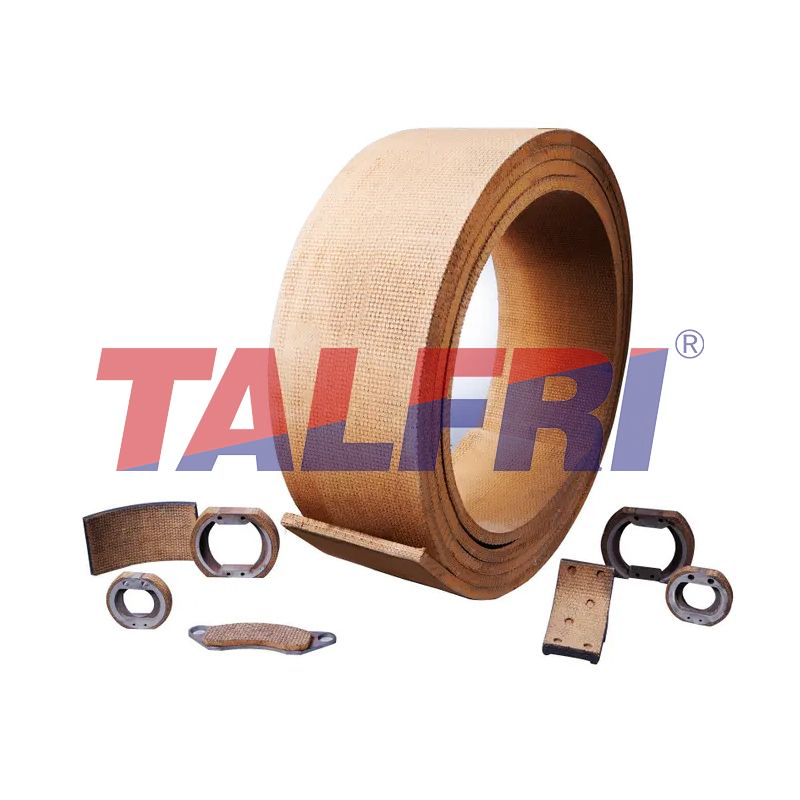
Balancing annual maintenance budgets requires choosing the optimal form factor. Fleet managers generally evaluate two main distinct procurement paths. They base this choice on their available dry-dock resources.
Bulk rolls offer strong advantages for massive industrial shipyards.
They provide high inventory flexibility for highly varied fleet maintenance.
Distributors supply standard industrial widths and thicknesses quite rapidly.
Trained technicians cut exactly what they need directly on-site.
However, bulk rolled material inherently creates complex installation challenges. Mechanics must cut, bend, and drill the thick material manually. Mistakes during manual drilling severely compromise overall material integrity. Off-center holes weaken the structural hold around the vital rivets.
Pre-engineered custom brake lining quickly solves many of these onsite issues.
Specialized suppliers deliver pre-cut and accurately pre-radiused sets.
Factory hole patterns match specific OEM deck models perfectly.
Custom replacement sets align easily onto MacGregor or TTS winches.
Choosing bespoke replacement sets dramatically reduces expensive dry-dock labor hours. It also mitigates incredibly common and dangerous onsite installation errors. Your maintenance crew spends less time measuring parts. They spend more time securely testing the actual deck machinery.
Even premium synthetic materials will fail without proper field installation. Bare surface preparation acts as the foundational first step. You must machine or thoroughly degrease the exposed winch drum. Mechanics must diligently remove surface rust, hard salt scale, and old friction deposits. A chemically contaminated drum destroys new woven brake lining rapidly. Clean steel ensures proper contact and maximum mechanical friction.
Fastening protocols require extreme attention to mechanical detail. Countersunk riveting remains vastly superior to any chemical bonding. Harsh marine environments degrade industrial chemical adhesives quite rapidly. Solid mechanical fasteners never lose their physical grip unexpectedly. You must always select highly corrosion-resistant rivet materials carefully. Solid copper and brass rivets resist seawater oxidation perfectly. Technicians must strictly use correct torque and pneumatic compression tools. Proper mechanical tensioning completely prevents the outer material from lifting.
The bedding-in process finalizes the physical installation securely. You cannot apply maximum working loads immediately after riveting. You must carefully burnish the new friction material surface first. Run the deck winch lightly to wear down microscopic high spots. This highly critical step ensures you achieve at least 80% surface contact area. High surface contact area absolutely guarantees maximum safe holding torque.
Procuring safe marine-grade components requires incredibly strict supplier vetting. You must actively demand rigorous quality assurance documentation from vendors. Current ISO 9001 certification forms the basic global manufacturing baseline. However, maritime applications strictly demand specific independent Type Approvals. Always check for current certificates from major international classification societies. DNV, ABS, and Lloyd's Register approvals validate actual real-world performance.
Batch consistency separates premium global manufacturers from average local suppliers. You should always strongly evaluate a manufacturer's internal testing transparency. Ask them directly for detailed material data safety sheets. Request factory batch friction test reports long before finalizing purchase orders. Transparent and reliable suppliers happily provide these vital engineering documents.
Supply chain scalability matters immensely during urgent vessel repairs. Assess the expected delivery lead times for standard material rolls. Compare this directly against bespoke custom manufacturing timelines. Routine dry-dock periods always run on incredibly tight schedules. Your chosen supplier must deliver critical safety parts precisely on time.
Specifying the optimal friction product demands careful technical alignment. You must strictly match material chemistry and physical dimensions precisely. Dynamic friction metrics must align perfectly with the unforgiving realities of the sea. We advise focusing strictly on long-term structural material stability. You must also enforce rigorous mechanical installation protocols.
We highly recommend prioritizing industrial suppliers who offer transparent test data. Look exclusively for synthetic materials engineered specifically for hostile maritime conditions. High-moisture and high-load environments require proven, robust marine engineering. Cutting corners on procurement always leads to expensive operational failures.
Do you need expert help configuring your specific deck equipment? Contact our dedicated engineering team today. Please provide your precise winch drum dimensions and peak operational load requirements. We will quickly generate a custom specification sheet and an accurate pricing estimate for your vessel.
A: Lifespan typically ranges from two to five years. It depends heavily on operational frequency and total load weights. Routine maintenance also plays a massive role. Keeping winch drums fully clean from salt and rust significantly extends the usable life of the friction material.
A: Yes, they are highly compatible. Physical dimensions generally match legacy parts perfectly. However, the bedding-in process differs slightly. The friction characteristics of modern blends might require minor adjustments to your initial brake band tensioning. Always test holding power thoroughly before returning the winch to active service.
A: Brass wire actively conducts intense heat away from the primary friction surface. This cooling effect directly prevents dangerous thermal fade. It also massively increases the overall tensile strength of the brake band. This reinforced structure easily handles heavy-duty dynamic lifting and static holding loads.
A: Start by measuring the precise inner diameter of the bare steel brake band. Next, measure the exact physical width and the required thickness of the old material. Finally, map the exact rivet hole pattern carefully to ensure perfect mechanical alignment during your final installation.


