| Availability: | |
|---|---|
| Quantity: | |
CCM
TALFRI
Our carbon ceramic brake rotor have a special three dimensional carbon base which is made of long fibers. It is obtained through a proprietary process which gives the possibility of depositing a layer of material on both mating surfaces to improve the friction coefficient. The three dimensional carbon base provides higher strengths than the traditional short fiber bases and ensures more of a safety factor on tough extreme applications.
Physical Properties:
Density/ g/cm3 2.0±0.05
Tensile Strength/ MPa 87
Compressive Strength/ MPa 212
Bending Strength/ MPa 189
Interlaminar Shear Strength/MPa 26
In-plane Shear Strength/MPa 49
Room Temperature Specific Heat/ J/kg·k 1140-1880(RT-1200℃)
Thermal Conductivity/ W/mK 40~50
Frictional Properties:
Dry 0.27~0.35
In Fresh Wate 0.29~0.35
In Sea Water 0.24~0.29
@Static 0.35~0.55
|
|
Our carbon ceramic brake rotor have a special three dimensional carbon base which is made of long fibers. It is obtained through a proprietary process which gives the possibility of depositing a layer of material on both mating surfaces to improve the friction coefficient. The three dimensional carbon base provides higher strengths than the traditional short fiber bases and ensures more of a safety factor on tough extreme applications.
Physical Properties:
Density/ g/cm3 2.0±0.05
Tensile Strength/ MPa 87
Compressive Strength/ MPa 212
Bending Strength/ MPa 189
Interlaminar Shear Strength/MPa 26
In-plane Shear Strength/MPa 49
Room Temperature Specific Heat/ J/kg·k 1140-1880(RT-1200℃)
Thermal Conductivity/ W/mK 40~50
Frictional Properties:
Dry 0.27~0.35
In Fresh Wate 0.29~0.35
In Sea Water 0.24~0.29
@Static 0.35~0.55
|
|
At extreme speeds, braking is no longer just about stopping—it is about confidence, control, and consistency under pressure. The High Performance Lightweight Carbon Ceramic Brake Rotors are engineered for drivers who demand absolute reliability when every fraction of a second matters.
Inspired by motorsport-grade braking technology, these carbon ceramic rotors are designed to withstand intense thermal loads, repeated high-speed deceleration, and aggressive driving conditions, while significantly reducing unsprung weight. The first time you see them, their dark, refined surface communicates purpose. The first time you feel them, the response is immediate—firm, progressive, and reassuringly stable.
Developed specifically for high-performance vehicles such as the Nissan GTR R35, these rotors address common limitations of traditional cast iron systems: brake fade, excessive weight, and rapid wear under extreme conditions. Instead of fighting heat, carbon ceramic material embraces high temperatures, maintaining structural integrity and friction performance even after repeated hard braking.
This product is not designed for casual driving alone—it is built for track days, racing applications, and performance-focused enthusiasts who value precision over compromise. Every stop becomes predictable. Every lap becomes repeatable.
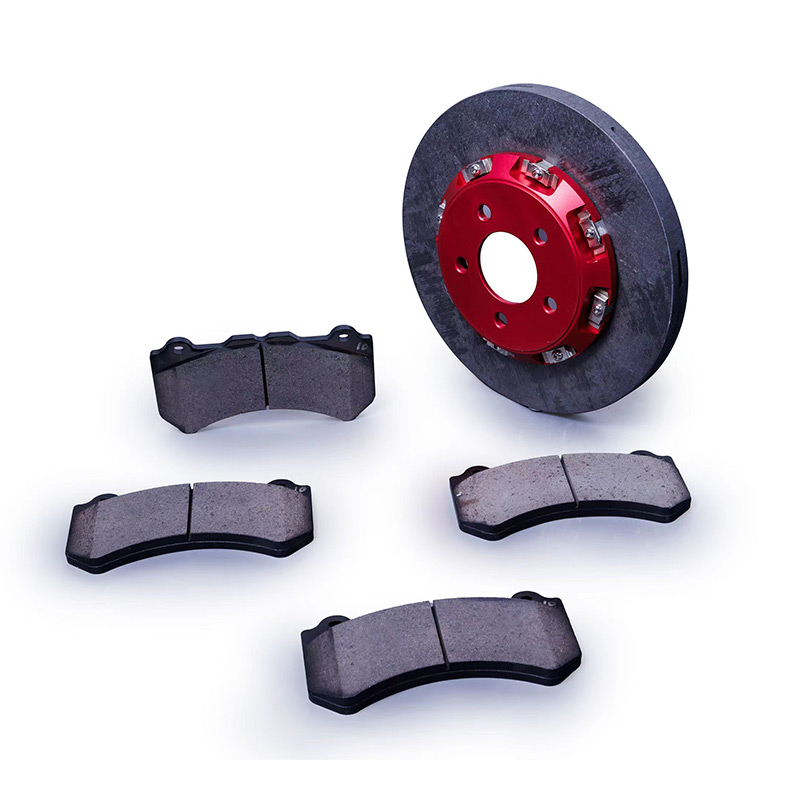
Carbon ceramic braking is not a single upgrade—it is a complete transformation of how braking systems behave under stress.
Substantially reduces unsprung mass
Improves steering response and vehicle agility
Enhances suspension performance during cornering
Maintains braking performance at extreme temperatures
Eliminates brake fade during repeated high-speed stops
Suitable for track and endurance racing conditions
Resistant to thermal cracking and deformation
Consistent rotor geometry even after prolonged use
Reliable performance lap after lap
Smooth and progressive pedal feel
Reduced vibration compared to conventional rotors
Stable friction engagement under varying loads
These carbon ceramic brake rotors are engineered for environments where failure is not an option.
High-speed deceleration at the end of long straights
Repeated braking without performance loss
Improved lap consistency and driver confidence
Nissan GTR R35 and similar performance platforms
Drivers seeking racing-grade braking reliability
Reduced brake dust and improved longevity
Ideal for modified or tuned vehicles
Compatible with high-performance brake pads
Suitable for bespoke braking systems
Endurance racing and time-attack applications
Stable performance under prolonged stress
Trusted material choice for professional teams
Q1: What makes carbon ceramic rotors better than cast iron?
Carbon ceramic rotors offer significantly lower weight, higher heat resistance, and longer service life, especially under extreme braking conditions.
Q2: Do carbon ceramic rotors reduce brake fade?
Absolutely. Their material properties allow them to maintain consistent braking performance even at very high temperatures.
Q3: Can these rotors be customized for other vehicles?
Yes. Custom dimensions and mounting configurations are available upon request.
Q4: Are special brake pads required?
For optimal performance, high-quality compatible brake pads are recommended to match carbon ceramic surfaces.
At extreme speeds, braking is no longer just about stopping—it is about confidence, control, and consistency under pressure. The High Performance Lightweight Carbon Ceramic Brake Rotors are engineered for drivers who demand absolute reliability when every fraction of a second matters.
Inspired by motorsport-grade braking technology, these carbon ceramic rotors are designed to withstand intense thermal loads, repeated high-speed deceleration, and aggressive driving conditions, while significantly reducing unsprung weight. The first time you see them, their dark, refined surface communicates purpose. The first time you feel them, the response is immediate—firm, progressive, and reassuringly stable.
Developed specifically for high-performance vehicles such as the Nissan GTR R35, these rotors address common limitations of traditional cast iron systems: brake fade, excessive weight, and rapid wear under extreme conditions. Instead of fighting heat, carbon ceramic material embraces high temperatures, maintaining structural integrity and friction performance even after repeated hard braking.
This product is not designed for casual driving alone—it is built for track days, racing applications, and performance-focused enthusiasts who value precision over compromise. Every stop becomes predictable. Every lap becomes repeatable.

Carbon ceramic braking is not a single upgrade—it is a complete transformation of how braking systems behave under stress.
Substantially reduces unsprung mass
Improves steering response and vehicle agility
Enhances suspension performance during cornering
Maintains braking performance at extreme temperatures
Eliminates brake fade during repeated high-speed stops
Suitable for track and endurance racing conditions
Resistant to thermal cracking and deformation
Consistent rotor geometry even after prolonged use
Reliable performance lap after lap
Smooth and progressive pedal feel
Reduced vibration compared to conventional rotors
Stable friction engagement under varying loads
These carbon ceramic brake rotors are engineered for environments where failure is not an option.
High-speed deceleration at the end of long straights
Repeated braking without performance loss
Improved lap consistency and driver confidence
Nissan GTR R35 and similar performance platforms
Drivers seeking racing-grade braking reliability
Reduced brake dust and improved longevity
Ideal for modified or tuned vehicles
Compatible with high-performance brake pads
Suitable for bespoke braking systems
Endurance racing and time-attack applications
Stable performance under prolonged stress
Trusted material choice for professional teams
Q1: What makes carbon ceramic rotors better than cast iron?
Carbon ceramic rotors offer significantly lower weight, higher heat resistance, and longer service life, especially under extreme braking conditions.
Q2: Do carbon ceramic rotors reduce brake fade?
Absolutely. Their material properties allow them to maintain consistent braking performance even at very high temperatures.
Q3: Can these rotors be customized for other vehicles?
Yes. Custom dimensions and mounting configurations are available upon request.
Q4: Are special brake pads required?
For optimal performance, high-quality compatible brake pads are recommended to match carbon ceramic surfaces.